Dolores Gordon-Smith spoke about Freeman Wills Crofts at the first Bodies From The Library conference in 2015. A live recording of her fascinating talk is (finally) available with her slides at:
Hopefully, there will be more recordings available shortly (depending on time, permissions etc.)
Ricardo Jasso Moedano of Mexico City argues that there is a connection between Anthony Trollope and Agatha Christie. He believes that Christie took inspiration for one of her plots from Trollope’s oft-quoted decision to kill off his character Mrs Proudie in the Last Chronicle of Barset, following a conversation he overheard at his club, which he describes in his Autobiography:
“It was with many misgivings that I killed my old friend Mrs. Proudie. I could not, I think, have done it, but for a resolution taken and declared under circumstances of great momentary pressure.
It was thus that it came about. I was sitting one morning at work upon the novel at the end of the long drawing-room of the Athenaeum Club, as was then my wont when I had slept the previous night in London. As I was there, two clergymen, each with a magazine in his hand, seated themselves, one on one side of the fire and one on the other, close to me. They soon began to abuse what they were reading, and each was reading some part of some novel of mine. The gravamen of their complaint lay in the fact that I reintroduced the same characters so often! `Here’, said one, `is that archdeacon whom we have had in every novel he has ever written.’ ‘And here’, said the other, `is the old duke whom he has talked about till everybody is tired of him. If I could not invent new characters, I would not write novels at all.’ Then one of them fell foul of Mrs. Proudie. It was impossible for me not to hear their words, and almost impossible to hear them and be quiet. I got up, and standing between them, I acknowledged myself to be the culprit. `As to Mrs. Proudie,’ I said, `I will go home and kill her before the week is over.’ And so I did. The two gentlemen were utterly confounded, and one of them begged me not to forget his frivolous observations.”
These circumstances are mirrored in Agatha Christie’s novel Taken at the Flood, written in 1948. Poirot overhears a conversation in which the wish that a woman were dead was expressed and, shortly afterwards, she is indeed murdered.
It is difficult to prove whether or not Christie was directly inspired by the events described by Trollope in his Autobiography. She might well have been aware of the anecdote and she was certainly very able at taking things she heard about and putting them to use in her plots.
I leave it to you to hear Ricardo’s arguments and see whether you find them persuasive. (You can switch on English subtitles to help follow Ricardo’s argument.)
We are busy with the last few tasks to stage this year’s conference which takes place on Saturday. If we had a spare moment we would probably devote it to wondering where all the time went!
To put you in the best possible frame of mind to attend the conference why not check out our video “trailer”.
We’re really looking forward to seeing you all on the day, catching up with old friends from previous years and meeting new friends attending their first “Bodies”.
See you there!
The Bodies From The Library team
Security:
We are all deeply saddened by the recent terrorist attacks in London and Manchester. In order to protect visitors to the British Library where the conference is taking place, there will be additional security measures including bag-searches on entry. Please allow extra time on arrival to facilitate this.
For those of you who wish to read up on the subjects of two more of our sessions at this year’s conference we suggest the following titles may provide an introduction to Edmund Crispin and Ronald Knox.
The Moving Toyshop by Edmund Crispin Love Lies Bleeding by Edmund Crispin Holy Disorders by Edmund Crispin
The Viaduct Murder by Ronald Knox The Body In The Silo by Ronald Knox Double Cross Purposes by Ronald Knox The Footsteps at the Lock by Ronald Knox Still Dead by Ronald Knox Behind the Screen by The Detective Club The Floating Admiral by The Detective Club Six Against The Yard by The Detective Club
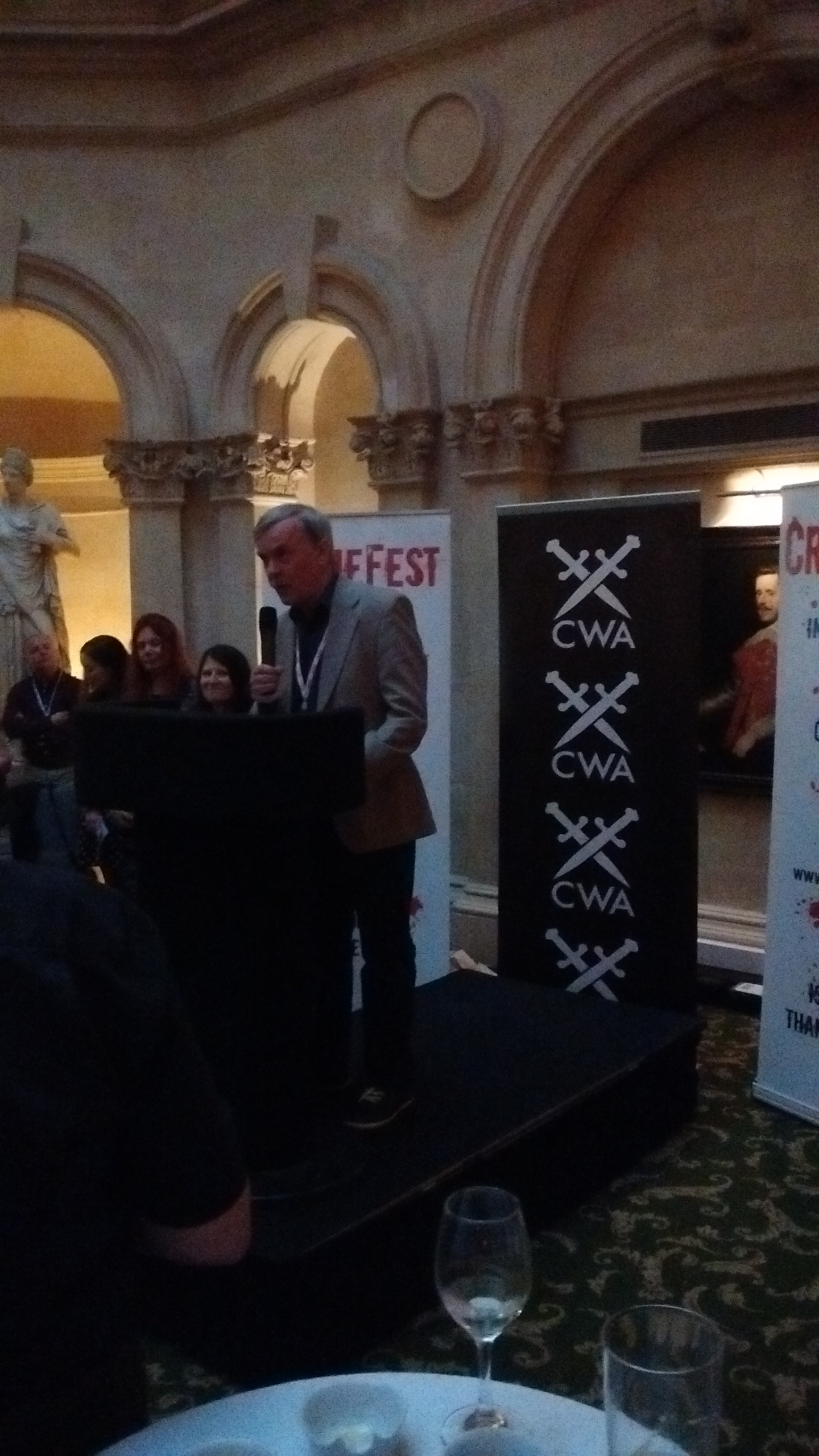
Martin Edwards, in his capacity as Chair if the Crime Writers’ Association, introduced the long-lists of nominations for the CWA 2017 Dagger awards during the CWA reception at Crimefest in Bristol. The winner of the CWA Dagger in the Library award will be announced at the Bodies From The Library conference on June 17th.
At Crimefest in Bristol and looking forward to tomorrow’s session on the Tom Adams covers for Agatha Christie’s novels. Our own John Curran has provided the text of the book which brings together in one place some of Tom’s most distinctive work. Tom and John will be interviewed by Jake Kerridge in what promises to be an illuminating session.
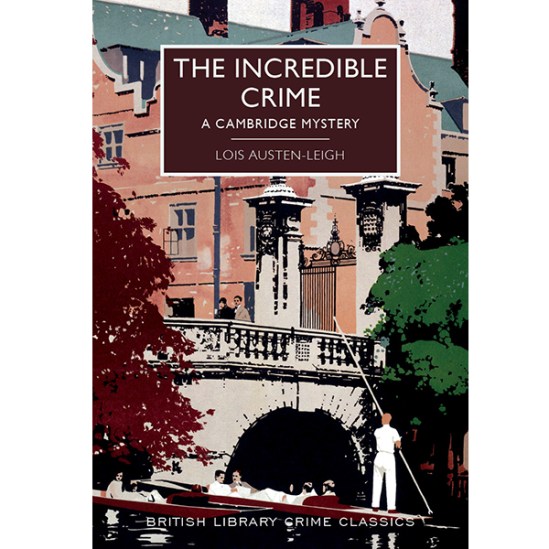
Professor Kirsten Saxton will be speaking about Lois Austen-Leigh’s The Incredible Crime at the Bodies From The Library conference. The novel is newly re-issued in the British Libraries Crime Classics series (published last week) and is Professor Saxton’s recommended pre-conference reading for attendees who wish to make the most of her session.
To buy your copy direct from the British Library’s online shop go to:
(P.S. when we last checked the website it had not been updated to reflect the book’s publication on 10th May but fear not – the site may talk about pre-ordering but it is actually published and on sale!)
Delegates at the Bodies From The Library conference in June will be able to buy advance copies of The Story of Classic Crime in 100 Books by Martin Edwards at a specially discounted price of £20. Martin will be talking about the book at the conference and, if you are persuasive, may be willing to sign your copy on the day.
Here’s what Publishers Weekly said about the book in its recent review:
“Written as a companion to the British Library’s Crime Classics series of reprints, this descriptive critical catalogue of 100 crime and mystery novels (mostly British) published in the first half of the 20th century is irresistible for aficionados and a reliable reading list for newcomers. Edwards’ picks, most published during detective fiction’s golden age between the two world wars, range chronologically from Doyle’s The Hound of the Baskervilles (1902) to Julian Symons’s The 31st of February (1950) and include, in addition to many of the usual suspects, a few outliers sure to enliven debates among diehard fans. He groups his selections into 24 chapters that cover numerous aspects of the literature—the great detectives, the fair-play mystery (epitomized by Ronald Knox’s The Body in the Silo), the miraculous or locked-room mystery (a specialty of John Dickson Carr), country house and manor murder mysteries, and so on—and whose ordering shows classic tropes giving way to newer approaches more resonant with modern times. A crime novelist in his own right, Edwards (The Golden Age of Murder) brings a specialist’s discerning eye to discussions of each book’s significance, and without giving away key plot points. This is an exemplary reference book sure to lead readers to gems of mystery and detective fiction.”
Do you need any other reason to attend the conference?
We are delighted to announce that Sarah Ward will be speaking at Bodies From The Library this year. Sarah is the author of two DC Childs novels, In Bitter Chill and A Deadly Thaw (Faber and Faber) set in the Derbyshire Peak District where she lives. Her third book in the series, A Patient Fury, is out in September. On her blog, Crimepieces (www.crimepieces.com), she reviews the best of current crime fiction published around the world. She is a judge for the Petrona Award for translated Scandinavian crime novels.



 The Bodies From The Library