New Allingham titles available

In 1931, Margery Allingham was, not for the first time, nor for the last, in a tight spot financially. Typically, she tried to write her way out of trouble. She had been offered the opportunity to write a serial for Answers magazine, of which, as her biographer Julia Jones notes in The Adventures of Margery Allingham, Margery said, “They pay generously and promptly and really take one on the staff for the duration of the work.”

The serial she provided was Dangerous Secrets, also known as Other Man’s Danger, and recently republished by Ipso Books as The Man of Dangerous Secrets.

She followed this with Rogues’ Holiday in 1933 and The Devil and Her Son, also known as The Shadow in The House, in 1935 – both also now available from Ipso Books.

The novels were published under the pseudonym Maxwell March which gave Margery the chance to step away from her Campion series of novels and produce stand alone works that were freed from the constraints that publication under her own name might impose. Of course the deception did not last long and it quickly became known that the hand holding the pen behind the Maxwell March persona was in fact Margery.

The results are lighter, more breathless, thrillers which are in the classic mould of the British thriller between the wars, featuring Julia Jones observes, “helpless heroines and handsome heroes.” As such, they may be regarded as atypical of Allingham’s output at the time and so provide the reader with an intriguing sidelight on the author’s main body of work.

Special offer on Allingham and Simenon

Just in case you haven’t heard, the newly republished Margery Allingham novel,  The Devil and Her Son, written under the pseudonym Maxwell March, is available for a limited time only for just 99p.

Another limited time offer also applies to Georges Simenon’s Maigret at Picratt’s. Again the price is 99p.

Behind the Screen rebroadcast

The Detection Club produced a number of collaborative ventures to boost its coffers. The earliest of these, in 1930, was Behind The Screen.  Broadcast on the BBV in six episodes, each read by the author, and also serialised in The Lustener, the mystery was written by Hugh Walpole, Agatha Christie, Dorothy L. Sayers, Anthony Berkelwy,  E. C. Bentley and Rinald Knox. An abridged version, adapted by Jihn Peacock, last broadcast in 2015, is currently being rebroadcast by the BBC on Radio 4 Extra.  To listen to it, including the four episodes broadcast last week on the BBC Radio iplayer go to:

http://www.bbc.co.uk/programmes/b068b5jj

Another reason to book for Bodies In The Library 2018

  
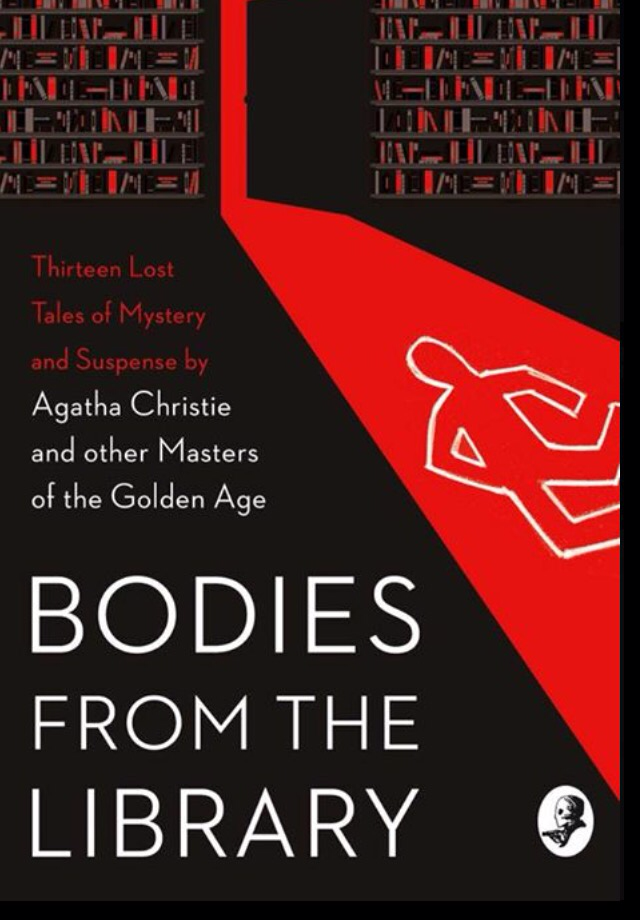
Tying in with the fourth Bodies From The Library conference on 16 June 2018, Tony Medawar has compiled this exciting new anthology of rare stories by Golden Age greats, bringing together 13 tales for the first time in book form.  These orphaned works come mainly from magazines and newspapers that are now almost impossible to find. 

The book will be available in hardback and features this stunning cover by Holly MacDonald. 

It is intended that copies will be available to buy at the conference, taking place once again at the British Library. 

So what are you waiting for? 

Book your tickets today while the Early Bird Discount is still available. 

Last few days of Early Bird Ticket discount

There are now less than two weeks before the Early Bird discount on the purchase of tickets for the 2018 Bodies From The Library conference ends. Don’t delay and miss out on the reduced price. Tickets also make a super Christmas treat for the Golden Age Detective Fiction Fan in your life that they can look forward to long after the last mince pie has been digested and the last slice of turkey has been despatched.

It couldn’t be easier to take advantage of the offer while it still lasts. All you have to do is click on the Buy Tickets button next to this post.

Merry Christmas and a Happy New Year
from
The Bodies From The Library Team

Witness for the Prosecution

Agatha Christie’s The Mousetrap is  eligible for its bus-pass as it is currently in its 65th year of its continuous run in the West End. Whether or not it should be pensioned off, as some unkind critics suggest, is a debate for another occasion but, I would argue strongly it is not the best Christie currently on the London stage. That honour I would unequivocally give to Witness for the Prosecution which is being staged in the old Council Chamber at London’s County Hall – the former seat of local government in the city.

This production, which has just been extended to run until September 2018, is a theatrical tour de force. The setting is redolent of the heated past debates which have taken place in the chamber and has been superbly transformed into the claustrophobic courtroom setting for the trial of Leonard Vole – played with appropriate mix of weakness and bravado by Jack McMullen. Catherine Steadman takes the eponymous role of Leonard’s wife Romaine and plays the audience with a powerful sense of drama through to the play’s shocking conclusion.

The experience was heightened for me by being Juror 12, and though I cannot give away the verdict (read out by Juror 1, another audience member, who stuck strictly to the script), it became clear that, for Christie, the barristers and judges in a courtroom are indeed very much like players in a theatrical production, addressing their pre-prepared lines to their audience – the jury – with every intention of swaying them emotionally to believe in their story, whether it be fact or fiction.

Even if you have seen the play before – or the excellent 1957 film (with Marlene Dietrich in the title role) – this production has tricks up its sleeve which make it, for me, a far better version than the recent TV adaptation and one that is much more true to the spirit of Christie.

Golden Age Christmas

I have been giving some thought to what Christmas presents to give to friends who are fans of Golden Age Detective Fiction. A big problem is trying to find something they haven’t already got on their bookshelves. With this in mind, here are the solutions I have come up with:

Fiction 

Foreign Bodies

A century before Scandi noir, writers across Europe and beyond were publishing detective stories of high quality. Often these did not appear in English and they have been known only by a small number of experts. These fascinating stories give an insight into the cosmopolitan cultures (and crime writing traditions) of diverse places including Mexico, France, Russia, Germany and the Netherlands.

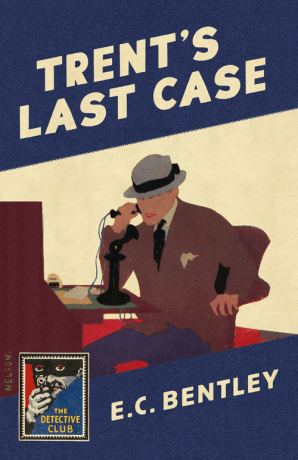
Trent’s Last Case 

Called by Agatha Christie “one of the best detective stories ever written” and newly republished in hardback under Harper Collins Crime Club imprint (at a bargain price of £9.99).

Rogues’ Holiday

The first of the lost Margery Allingham thrillers written as serials under the pseudonym Maxwell March has now been republished by ipso Books. J K Rowling says “My favourite of the four Queens of Crime is Allingham.”

Ye Olde Book of Locked Room Conumdrums

  
If you like your rooms locked and your crimes impossible then this collection of some of the finest (and least frequently reprinted) stories is for you. Its stories span the period from 440BC to 1918 and, best of all, it is abailable to download absolutely free. What is stopping you?

Non-fiction

Agatha Christie’s Complete Secret Notebooks

A fascinating insight into the working methods of the most successful author of the Golden Age by arguably the leading authority on her works. It contains many revelations, not least the discarded endings from a number of her books, deleted scenes and even which famous Poirot novel started life as a Miss Marple adventure.

The Golden Age of Murder

Now out in paperback and updated this tells the history of the Detection Club and its members – the great writers of the Golden Age of Detective Fiction. It won the Edgar, Agatha, Macavity, H R F Keating and Oscar awards in the year of its first publication (ok, I lied about the Oscar).

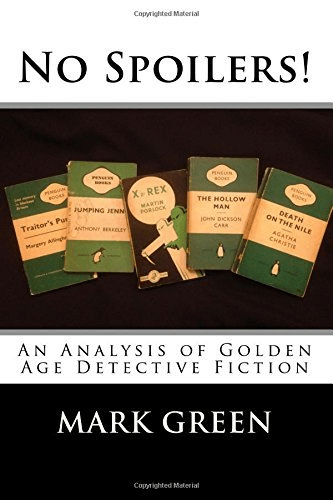
No Spoilers!


Analyses Christie’s Poirot and Miss Marple stories to reveal key differences in their solutions (without ever giving away whodunnit), examines trends in locked room mysteries and considers Golden Age Detective Fiction as popular culture giving insights into society and culture between the wars.

Bounders, Cads and Gender Politics

Sometimes you read a sentence which is so shocking that you just have to put the book down for a minute, take a deep breath and gather your thoughts before you can return to it and carry on. I had one such moment recently as I read Margery Allingham’s The Fashion In Shrouds. Published in 1938, it contained a sentence in which her hero, Albert Campion, who is neither a bounder nor a cad, expresses views about women which, quite simply, could not be expressed in writing today except by some desperately foul misogynist in certain vile corners of the internet. Yet the appearance of these views in what is quite definitely a work of mainstream popular fiction must, by the fact that they did appear without any significant public backlash, have been held without apology by a substantial part of the readership.

To compound the shock factor, the sentence is spoken by Campion to his sister Val:

“‘Oh,’ said Mr Campion furiously, ‘this is damned silly introspective rot. What you need, my girl, is a good cry or a nice rape – either I should think.’”

This is an acceptable perspective for a decent man to hold in 1930s Britain.
His sister does not express outrage at this suggestion but rebuffs it with a laugh, described as “Spiteful” saying:

“‘There’s a section of your generation who talks about rape as a cure for all ills, like old Aunt Beth used to talk about flannel next to the skin,’ she said witheringly. ‘This mania for sex-to-do-you-good is idiotic.”

She thinks his idea is old fashioned and stupidly wrong-headed but not fundamentally appalling as we would today. Indeed, both she and he regard rape as a sexual act whereas the prevailing view today is that rape is an act of violence and male dominance over females who are treated as subservient and objects to be possessed.

It may be worth noting that this exchange takes place in the context of a discussion on how Val responds on an emotional level to being dumped by the man she loves in which she says of her sex:

“We can’t…take the intelligent path except by a superhuman effort. Our feeling is twice as strong as our heads…We’re feminine, you fool!”

This is a leading woman author putting these words into the voice of a sympathetic female character who is a successful businesswoman.

The past is a very different place. Attitudes and ideas which would raise the hackles of any self-respecting 21st century feminist are accepted as gospel and go unchallenged in the 1930s. So that even if men thinking “a nice rape” (an oxymoron if ever there were one!!!) could be good for a woman are viewed as being somewhat behind the times they are not seen as outrageous and in need of a serious re-education about the reality of what rape is.

I happened to follow this book with Carter Dickson’s He Wouldn’t Kill Patience, published in 1944 and set in 1940 at the very beginning of the London blitz. In this popular and successful novel, the (male) author’s detective is a middle aged and rather pompous middle class male – Sir Henry Merrivale – who tells a younger man after he has an argument with a young woman that:

“‘If she starts raggin’ you, son, just wallop her one. That’s the way to treat wenches when they get out of hand.’”

Now, while it must be conceded that the younger man does not take up his mentor’s advice, which was given in front of the young woman in question, there is no response from either of the younger pair to indicate that they see anything fundamentally wrong with this suggestion. Clearly male violence towards women, and in particular what might now be termed domestic violence occurring within a supposedly loving relationship, is not viewed in the wholly unacceptable terms in which it is considered seventy years later.

However, it is evident from the texts that there are nuances and shades of meaning in the 1930s way of thinking which are now lost on the modern reader.
In The Fashion in Shrouds, Allingham has her character Amanda Fitton, who plays an intelligent female sidekick for her detective Campion in this novel, say of a male character:

“I thought the chap was close to being a bounder and he was certainly a dreadful old cad”.

Which made me pause to wonder what was the difference between a “bounder” and a “cad” such that one could certainly be the latter while only approaching being the former?

Modern dictionaries are no help. Indeed, they frequently define the one in terms of being the other.

“Bounder: a man who behaves badly or in a way that is not moral, especially in his relationships with women” (Cambridge)

“Bounder: a man whose behaviour is ungentlemanly; cad” (Collins)

“Bounder: a man of objectionable social behaviour; cad” (Merriam-Webster)

“Bounder n. British colloquial or jocular. An ill-bred or dishonourable person.” (Oxford Compact 1996)

“Bounder: a reprehensible person. Synonym – cad” (Thesaurus.com)

“Cad: a man who acts with deliberate disregard for another’s feelings or rights” (Merriam-Webster)

“Cad n a man who behaves dishonourably (abbreviation of caddie in an earlier sense ‘odd-job man’)” (Oxford Compact 1996)

“Cad: sly, dastardly person. Synonym – bounder” (Thesaurus.com)

“Cad: a rogue or bounder.” (Urban-dictionary)

Interestingly Roget’s Thesaurus lists the terms together under the theme of “Vulgarity”.

It seems that the insertion of a cigarette paper between the two terms is scarcely possible and seems to rely on the bounder’s ungentlemanly and dishonourable conduct being principally, though not exclusively, in relation to women whereas a cad appears to make no such gender distinction in the unfortunate victims of his selfish and dishonourable actions.

So perhaps Amanda was saying that the man in question was badly behaved towards everyone and that his behaviour towards women was not focussed but was part of a broader failure to conform to expected standards of conduct.

I’m glad we got that sorted out.

Because that means we can now turn to distinguishing a “cough drop” from a “bitch”. This stems from an exchange between Campion’s sister Val and Georgia, the woman who has “stolen” her boyfriend:

“‘There’s a word for you, Georgia my pet. You’re a proper cough drop, aren’t you?’

‘Darling, how vulgar! I thought you were going to say “bitch”.’”

The latter epithet is, of course, still in regular use and its meaning is familiar but the former is more obscure. In the late nineteenth century it was a slang term for a disagreeable person – which would seem to fit the circumstances but not quite the character or social class of Campion’s sister or the tone of the conversation and the reaction of Georgia to the name applied to her. It was also, however, used to mean a type of person for whom the term a “character” or a “card” might also be used. This suggests a degree of indulgence and a wry, humorous view of the shortcomings of the character in question. This second sense seems closer to the tone of Val’s exasperated comment to her rival. It is interesting to note the only other use of this term I have found in a similar, upper-class setting (Jeeves and the Tie That Binds by G. K. Chesterton). Wooster in an exchange with a chum says of Jeeves:

“And he has the added advantage that Bingley seems fond of him. He thinks he’s a cough drop.’

‘What an earth’s a cough drop?’

‘I don’t know, but it’s something Bingley admires.”

This suggests that there was evidently some confusion even within the circles that used the term as to the precise meaning. But if it is a term that can be applied to Jeeves then it most certainly has a positive sense. As is often the case in English, a word can have diametrically opposed meanings – positive or negative connotations – which the listener has to interpret according to the context of the conversation. Think Michael Jackson’s song Bad in which the street-use of the word means its precise opposite – extremely good.

Which brings us to another term used in The Fashion in Shrouds: “daisy”. The term is used by a policeman to describe two brothers who are suspected of involvement in criminal activities but whose response to questioning by the police skillfully frustrates the enquiry.

One dictionary records the use of the word to indicate a person who “is deemed excellent or notable”. It is possible that the policeman may be expressing grudging admiration of the brothers’ interview technique but it seems unlikely under the circumstances. He would be more likely to express his frustration with a term of disparagement.

I am therefore inclined to note that shortly before this remark is made by the policeman, one of the brothers in response to questions about whether he has seen a particular woman observes that, “There were so many girls in the world, he said. One was very much like another. He himself had no use for women.” Taking this remark in conjunction with a slang term for a group homosexual act – “a daisy chain”, I am drawn to conclude that the term in this context is a vulgar reference to the brothers being gay – at a time when practicing homosexuality was a criminal offence in the UK.

I am sometimes inclined to wish for a glossary of the terms used which would aid my understanding of the nuances and shades of meaning in conversations reported in texts from the Golden Age. The Fashion in Shrouds is liberally scattered with such terms which have now passed from common parlance – if indeed they ever were in regular use outside a limited circle of privileged upper classes.

One word that does appear in casual conversation throughout the book and which betrays a wholesale difference in values and norms than we apply today is the word “nigger”. This has now a capacity to shock when used that is almost on a par with the “nice rape”. But, as with its frequent appearance in texts such as To Kill A Mocking Bird or the works of Mark Twain, the modern reader must accept that it was used frequently without embarrassment in everyday language. That this usage in itself reveals an institutionalized racism in the society using the term is, of course, true, but it cannot be allowed to distract the reader from the storyline. That would be a mistake since it would be a wholly unintended and unanticipated line of thought on the part of the reader so far as the author was concerned. It certainly cannot be used as any sort of indicator of a character’s moral compass – that would require closer inspection of the language and attitudes within which the word is used.

I therefore conclude that the modern reader, when venturing into Golden Age society, must tune in to the tone of conversations reported to understand the many unfamiliar terms bandied about so casually and equally must avoid applying modern cultural mores to a different time and place which might distract them from the main event. My advice in this regard might well take the form of “Hold your nose and jump in.”

Friday Noir

Tickets for the Bodies From The Library Conference 2018 are available now for a limited time at the special discounted price of £35 (full price £40). Book your ticket today to be assured of your place at the only detective fiction conference at the fabulous British Library venue and save £5 on the normal ticket price.

DSCF4832

(Image from 2015 conference)

Agatha Christie’s Locked Room Mysteries (part 5/5)

Agatha Christie wrote twelve short stories in the locked room mystery genre. Only one of these, The Dream, was included in the sample of such mysteries which I have been analyzing thus far. All were written in the Golden Age with the exception of Greenshaw’s Folly published in 1956.

Seven of the stories feature Hercule Poirot, four feature Miss Marple and one is a Mr Quin story.

If we compare her solutions with those used in the wider sample we find, not unsurprisingly that her most common solution is the murder from the outside, which she uses in a third of her stories. This is very much in line with the general usage of this type of solution.

Contrary to expectations, given her known expertise in the field of poisons and the fact that she uses poisons as the most common means for her murderers to kill their victims if we look at the totality of her works (see chapters two and three), we find that she uses poison as her solution for in only one of her locked room mysteries. This, again, keeps her very much in line with the general low usage of poison as a method – though as we saw in chapter nine, this is at odds with the approach taken by other women writers who resort to poison in more than a quarter of all their locked room mysteries.

Where Christie differs markedly from the general position is in her use – or rather the lack of it – of mechanical traps in her locked room mysteries. She never uses this device even though it is the second most favoured approach used by writers in the genre generally.

In contrast, the solution which Agatha uses much more than the general case is the plot where the murderer kills his victim then contrives to enter and leave the locked room so that witnesses are convinced he or she could not have done it owing to the timings. Perhaps she felt more comfortable managing the complexities of deciding a precisely timed sequence of events than dreaming up the complexities of a mechanical device. Mechanical competence was not something that was generally required of, or therefore found, in women of her generation and class.

Christie did, however, utilise a wide variety of possible solutions. In the dozen locked mystery stories she wrote, she employed seven out of the ten categories (and six out of Dickson Carr’s original seven types). Bearing in mind that she was writing in the Golden Age (i.e. before the “other” category’s first appearance) she showed remarkable inventiveness to produce such a range of very different types of solution in what must be regarded as a genre in which she was not a prolific producer of output – compared to, say, Dickson Carr.

An intriguing feature too, of the distribution of her solutions, is that all the four Miss Marple stories each employs a different type of solution whereas, of the seven Poirot stories, three, i.e. nearly half, employ the same type of solution. Furthermore, her use of an unbreakable alibi solution pre-dates the first appearance of such a solution in the general sample by more than a decade.

Perhaps one of the reasons why she reigns supreme as the Queen of Crime is that she consistently found new ways to baffle her readers and kept herself ahead of the game even in genres, such as the locked room mystery, where she was not regarded as particularly specialist.