The Body In The Library

IMG_2517

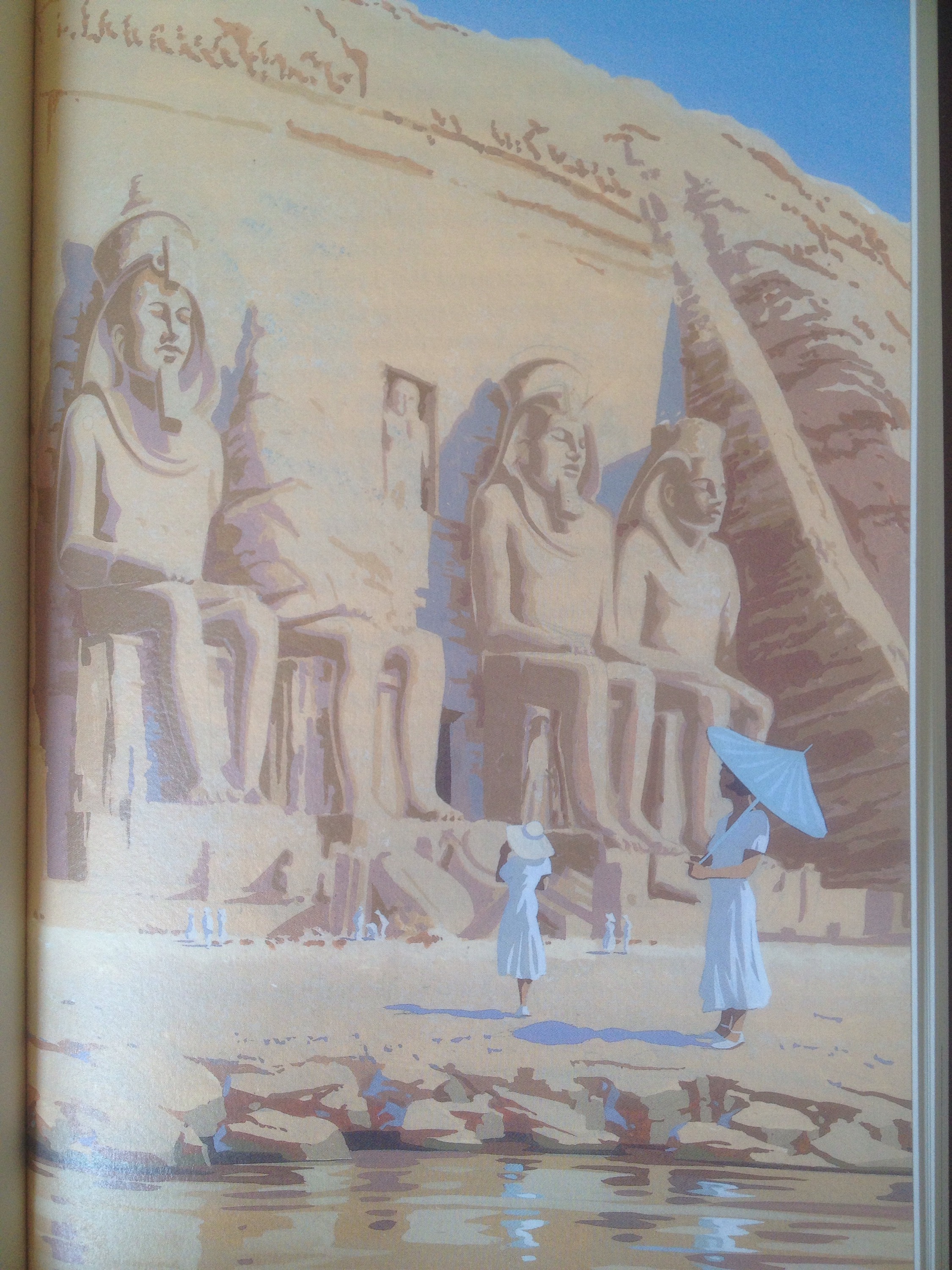
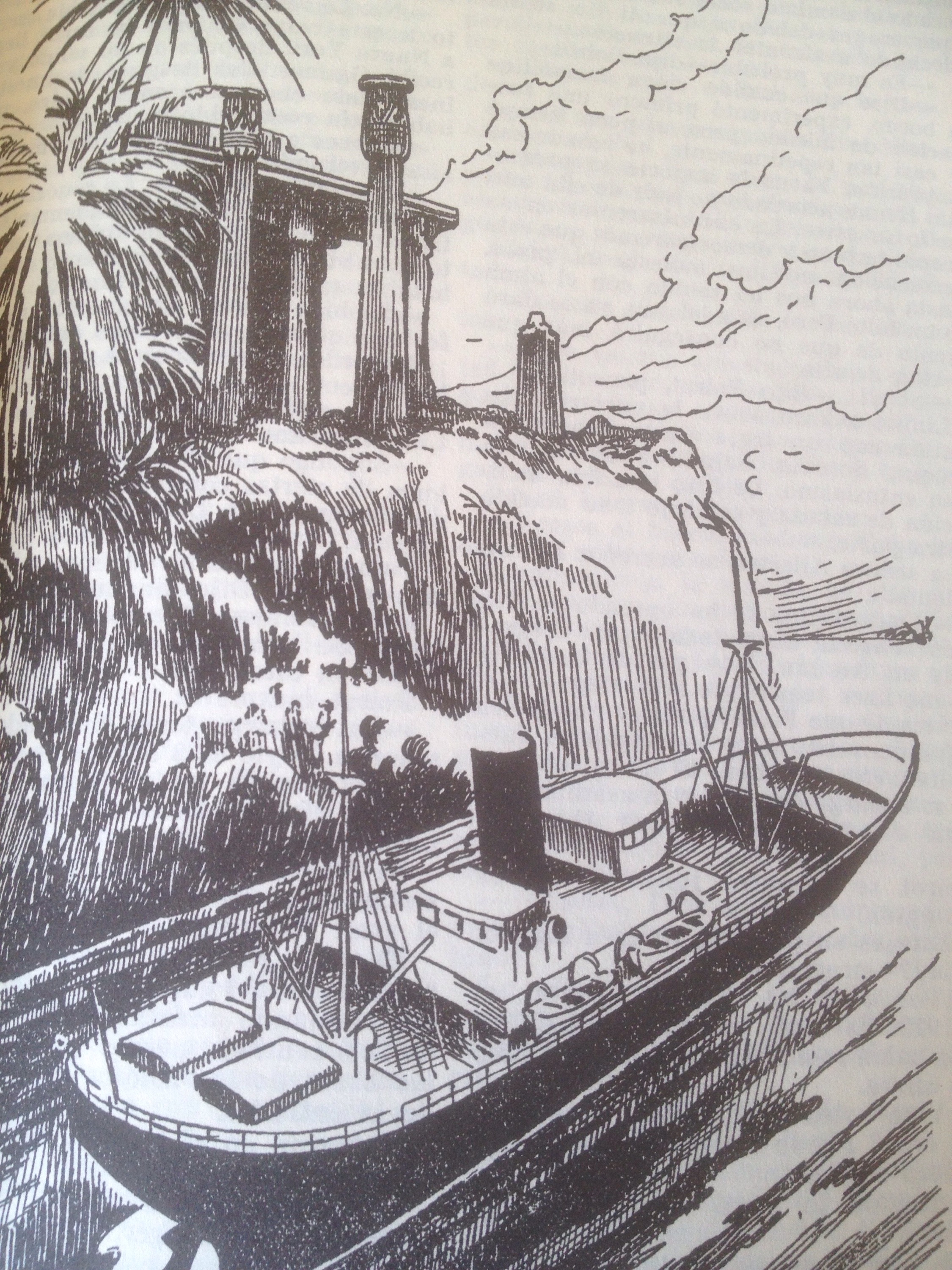
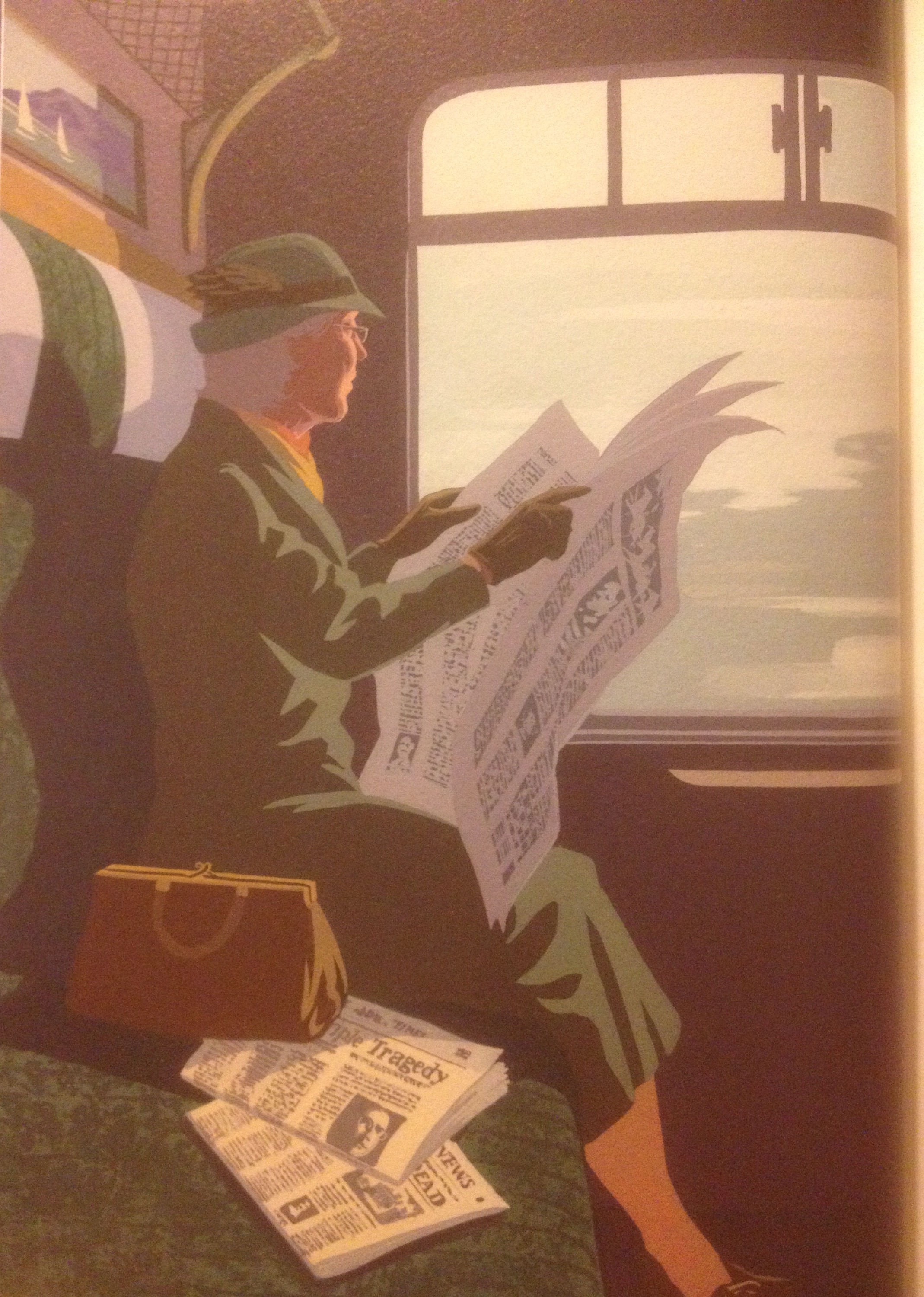
The above image, by Andrew Davidson in The Folio Society edition of The Body In The Library, for me epitomises the “cozy” in Agatha Christie – a palm court in a hotel with Miss Marple observing crucial developments. The resemblance in the illustration’s style to the railway posters of the 1920s and 1930s – a retro feel also exploited by The British Library Crime Classics series – is marked. So the reader is very clearly steered into the appropriate vintage feel and atmosphere.

The cast of characters in The Body In The Library includes the professional dancers who were a feature of such genteel hotels in resorts such as Torquay with which Agatha would be very familiar. Dorothy L. Sayers included a similar setting and captured too the slightly shabby truth behind the glamourous facade of the dancers’ lives in Have His Carcase.

Miss Marple is frequently viewed, by both readers of the books and by protagonists within the books, as an interfering old busy-body. Murderers, to their cost, have been known to dismiss her in such terms. Even her fellow gossips in St Mary Mead often snipe behind her back about her nosiness.

However, in this instance, contrary to such sniping, she is brought into the case by Mrs Bantry, the mistress of the house in which the body is discovered. Mrs Bantry recognises the insidious power of malicious gossip in a small village and understands all too well that there will be a presumption among their neighbours that her husband, in spite of all his protestations to the contrary, will be judged by them to have been carrying on with the young woman whose body turned up overnight in their library. She foresees that he will inevitably respond to the subsequent snubs he will suffer by withdrawing into his shell. This eventuality will ruin both their lives. Mrs Bantry therefore, trusting her husband’s statement that he has never seen the girl before in his life, brings in the only person she feels can get to the bottom of the mystery and save her husband, and her, from the fate she sees awaiting them. Miss Marple is, therefore, involved from the outset of the investigation, not as a nosy bystander but as a trusted friend.

Christie’s understanding of the dynamics of relationships in a small country village and the nasty undercurrents that swirl beneath the picture book exterior makes this apparently stereotypical “cozy”, in fact, anything but cozy. It is insightful and merciless in its exposure of the unpleasant truths about human nature that are normally hidden behind the genteel facade. Layers of this facade are peeled away to reveal the seamier reality beneath.

This ability to portray so accurately the English middle class of the inter-war years, both as they wish to appear and as they actually are – identifying their fine qualities and skewering their nastiness – is frequently overlooked in Christie. It is too easy for the modern reader to dismiss her depiction of this “cozy” world as a collection of lazy, stereotypes recycled endlessly in the service of fantastic plots. In fact, like so many stereotypes, they represented an all too recognisable collection of characters, many of whom would have been recognised by her contemporary readers as portraits, albeit at times perhaps caricatured, of people they actually knew. The modern reader who fails to appreciate this important point misses a vital aspect of Christie’s brilliance and relevance to the student of the social and cultural norms of that era.

Mark

Nostalgia by Design

hogs-back

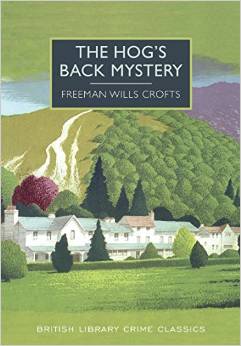
A feature of the cover design of the British Library’s Crime Classics series is the use of illustrations taken from old railway posters. This, no doubt, is tapping into a feeling of nostalgia for a bygone era when for most people travelling on holiday meant a train journey to the seaside.

Rob Davies of the British Library explained in his session at The Bodies From The Library conference in June that the adoption of this new retro look for their Crime Classics series saw a quantum leap in sales. With the series featuring John Bude novels such as The Cornish Coast Murder and The Lake District Murder, the connection between the locations and entertaining holiday reading was too good to miss so the 1920s and 1930s railway poster designs became an intrinsic part of the brand.

The evolution of such posters is intriguing in itself. Initially, when the railways first sought to encourage passenger travel they were torn between conflicting approaches – to load the posters with information about the destinations or to let the picture replace a thousand words and rely on strong images to attract attention. Gradually the latter approach prevailed with minimal text and often a strong “strapline”.  Who can forget “Skegness is so bracing”?

For a quick journey through the timeline of the evolution of railway posters go to:

http://www.bbc.com/culture/story/20150817-vintage-tourism-posters-railways-britain

Mark

The ABC Murders

IMG_2434

Agatha Christie’s 1936 novel The ABC Murders (also known as The Alphabet Murders) is her first stab at a serial killer story. Sorry – couldn’t resist the pun.

She followed on from Philip MacDonald’s opening foray into the sub-genre X v Rex, published in 1934 under the alias of Martin Porlock. This book, written from the perspective of the killer – the so called inverted style in which the suspense is generated by whether or not the killer, whom the reader already knows, will be caught rather than trying to solve whodunnit – begins to explore the psychology of the murderer. In this it has similarities to the earlier Malice Aforethought by Anthony Berkeley, writing under his Francis Iles pseudonym, in 1931.

Christie also purported to examine the psychology of the criminals – indeed, you could argue that much of Miss Marple’s detecting follows a psychological profiling approach – finding similarities in patterns of thought or behaviour that follow archetypes she has observed in her village of St Mary Mead. However, Christie never felt the explication of the criminal psyche should ever be anything but subordinate to the plot.

But then Christie only used her own name for her detective fiction (she reserved her alter-ego Mary Westmacott for romances), so she was to an extent hidebound by the public’s expectations of “the next Christie”. Both MacDonald and Berkeley made use of pseudonymous novels to explore new avenues to writing detective fiction in a way that Christie chose not to. They were thereby freed from the constraints of audience expectations by taking this approach.

In fact, Christie’s approach in The ABC Murders is innovative, mixing conventional first person narrative through her usual character of Captain Hastings, with narrative from the perspective of the killer.  She finesses the latter sections through the device of a purported reconstruction of the killer’s perspective after the fact by Hastings (with the benefit then knowing of Poirot’s solution) for his telling the story in the book. This is mixed with the introduction of actual letters from the killer addressed to Poirot, which give the killer a voice on the page. Such a mix of narrative perspectives had been done before – as early as 1868, Wilkie Collins was experimenting with this approach in his detective novel, The Moonstone.

What makes Agatha Christie’s entry into this multiple-perpective, serial killer world more significant than the more ambitious works of Anthony Berkeley/Francis Iles and Philip MacDonald/Martin Porlock is the size of her market. She was selling vastly more books than the others. Therefore he influence was commensurately greater.

I would argue, therefore, that The ABC Murders is one of the most significant Golden Age novels and a vital step out of the cozy and into the murkier, much more sinister world of the serial killer. Without her breaking the ground with the mass audience, the seeds could not have been sown which later bore fruit in the multitude of later novels which we see now featuring serial killers driven by innumerable warped psychotic impulses.

So it’s Agatha I have to thank for the sleepless nights I now endure having been “creeped out” by the visceral, nightmare visions I have subjected myself to, reading the likes of everything from Mark Billingham’s Tom Thorne books to the gruesome finds of Patricia Cornwell’s Kay Scarpetta.

Mark

A Kiss Before Dying


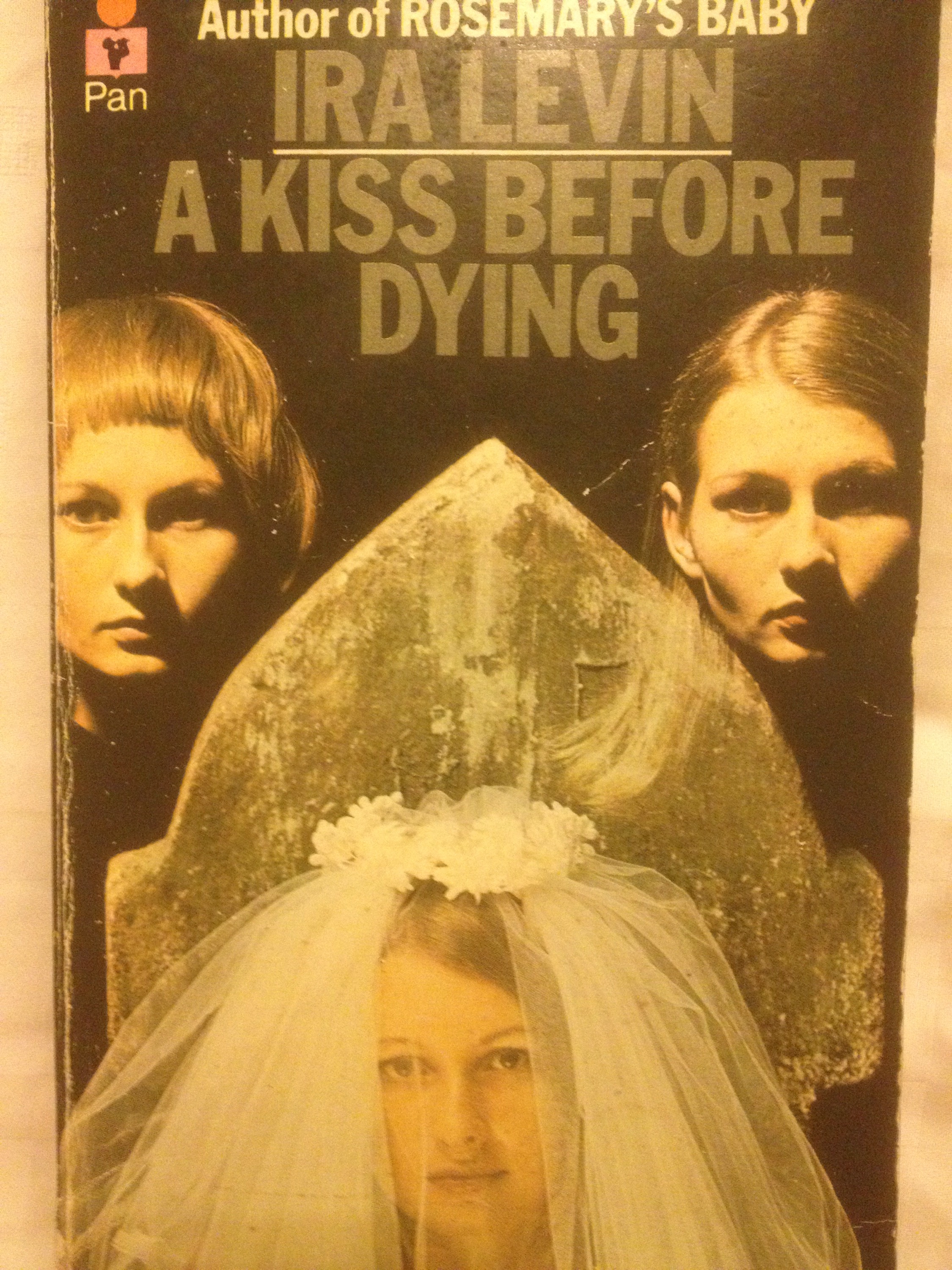
Not strictly a golden age novel – it was written in 1952 – but it has all the hallmarks of the finest writing of the golden age.

It is hard to imagine how Levin will manage to sustain the tension in his first person narrative when his thoughts turn to murder on page 27. There is somehow an inevitability about him succeeding. It is only at the end of part one, when the reader is flipped to the perspective of the person trying to find him that you realise that although you have been walking around in his head for 80 pages, you don’t know his name and neither does the detective. You suspect everybody that you now encounter is the man you now know so well from the inside. The shock when he is finally revealed is superb.

The book takes the psychology of the protagonist further along the trail started by Frances Iles in Malice Aforethought to create a believable insight into the mind of the character. The likely cause of his self-centred world view is made clear almost from the outset – well chapter 2 – and his ability to both plan and carry out complex schemes and improvise brilliantly when circumstances require makes him a thoroughly creepy and unnerving subject to read.

I was lent this book about a year ago and am finally able to share a discussion about it with the person from whom I borrowed it after they recommended it to me. It must have been so frustrating for them not to be able to talk about it without spoiling its various plot twists and revelations. And now I can only add my personal recommendation. Read it.  You will not be disappointed. It is brilliant.

Mark 

The Murder At The Vicarage

This is the first full length Miss Marple novel (earlier appearances had been in short stories).

It is easy to forget that when Agatha Christie wrote this in 1930 that it was far from being a “cozy” – a murder set in a small English village populated by apparently nice middle-class people who attend church, buy their groceries for delivery from the local shop and drink tea out of bone-china cups while gossiping about whose servants fail to polish the silver properly. Although St Mary Mead – the village in which the novel is set – has undoubtedly been the model for many such imitations that make up that sub-genre, this is a far more radical novel than its successors.

What is frequently overlooked is that it marks the entrance of one of the first female detectives to the genre in a full-length novel.

The great detectives of the Golden Age were previously (and for some time afterward remained) an almost exclusively male club. Christie already had Hercule Poirot. Dorothy L. Sayers had Lord Peter Whimsey. Margery Allingham had Albert Campion. John Dickson Carr had Dr Gideon Fell. Edmund Crispin had Professor Gervase Fen. Freeman Wills Crofts had Inspector French. Ngaio Marsh had Roderick Alleyn. G. K. Chesterton had Father Brown.

Christie, it is true, did include the female Tuppence as one half of her Tommy and Tuppence, light-hearted adventure stories but even though smarter than husband Tommy, she was not a standalone lead character in the way that the other detectives listed here were. There were also isolated examples of “Lady Detectives” from the Victorian era (indeed, one of these books has been published by the British Library as part of its Crime Classics series) but they had already sunk into obscurity by the dawn of the Golden Age.

Yet here was a woman solving the crimes and doing so by close attention to the facts, sharp observation and an understanding of human nature which, as Miss Marple herself points out, is the same the world over whether it be in a cosmopolitan city or a small village. No reliance on “female intuition” here.

In fact Miss Marple provides the role model for all the female detectives, private investigators and forensic scientists who have followed in her wake, solving crimes that baffle their male colleagues. Without Jane Marple’s trailblazing there would be no path for Sara Paretsky’s V.I. Warshawsi, Patricia Cornwell’s Dr Kay Scarpetta, Sue Grafton’s Kinsey Millhone or Kathy Reich’s Temperance Brennan to follow.

So tip your hats (and deerstalkers should you prefer), gentlemen, to the mould-breaking Miss Marple.

Mark

Richard Reynolds Recommends

We are very pleased that Richard has kindly compiled a list of all the books he mentioned in his talk on Oxbridge Detective Fiction at the Bodies From The Library conference. We have added the list to the Recommended Reading page of our website but include the list below for easy reference. 

Happy reading,

Mark

*R E Swartwout: The Boat Race Murder

*Michael Innes: Death in the President’s Lodging

J I M Stewart: Myself and Michael Innes (out of Print – Gollancz)

Michael Innes: Operation Pax

Michael Innes: Hamlet revenge

Michael Innes: The Secret Vanguard

Michael Innes: The weight of the Evidence

These Innes books go in and out of print – (Stratus publishing – always worth enquiring )

*Ronald Knox: Footsteps in the Lock

*Ronald Knox: The Viaduct Murder (and 4 more from Orion’s Murder Rooms POD imprint)

J C Masterman: An Oxford Tragedy

*Nicholas Blake: A Question of Proof (and lots more available  from   Vintage books /Random House )

*Edmund Crispin: Holy Disorders

*Edmund Crispin: The Moving Toyshop (all the other titles available from either Harper Collins, Vintage, Felony & Mayhem (USA) or Bloomsbury POD)

*Adam Broome: Oxford Murders

* Victor Whitechurch: Crime At Diana’s Pool

Victor Whitechurch: Murder in College

*Mavis Doriel Hay: Death on the Cherwell

*Mavis Doriel Hay: Murder Underground

*Dorothy L Sayers: Gaudy Night

*H C Bailey: Shadow on the Wall

Katherine Farrar books: The Missing Link, Cretan Counterfeit, Gownsman’s Gallows (out of print)

Stanley Casson: Murder by Burial

*Cyril Alington: Archdeacon’s Afloat

*Dermot Morrah: Mummy Case Murder

Lois Austen-Leigh: The Incredible Crime (NYP 2017)

*A Conan Doyle: Missing Three-Quarter

*Douglas G Browne: May Week Murder

*Glyn Daniel: The Cambridge Murders (*& Welcome Death available too)

*Adam Broome: Cambridge Murders

*Aceituna Griffin: Punt Murder

* VC Clinton-Baddeley: Death’s Bright Dart (& My foe Outstretched  Beneath the Tree, Only a Matter of Tiime, No Case for the Police, To Study a Long Silence – all available)

* Margery Allingham: Police at the Funeral (and loads of others available from Vintage, Felony & Mayhem & Bloomsbury POD)

*T H White: Darkness at Pemberley

*F J Whaley: Trouble in College

*Q Patrick: Murder at Cambridge

*Dorothy L Sayers: Nine Tailors (all available from Hodder & Stoughton)

*A A Milne: Winnie the Pooh

*A A Milne: Red House Mystery

If you have trouble obtaining any of the * items, which denote they’re in print, please contact  Richard Reynolds on literature@heffers.co.uk

Murder On The Orient Express


The motive for the murder in Christie’s Murder on the Orient Express is evidently inspired by a real life crime: the kidnapping and murder of the Lindbergh child. As a member of the Detection Club, Christie, like her fellow authors, shared a fascination with real life crime and, like other members, wove it into her fiction whether as in this case to provide a back story motive or as the main plotline.

The most famous example of this fixation by the club members was the collaborative book The Anatomy of Murder in which they propounded views and solutions to notorious real life crimes. Indeed, Dorothy L. Sayers contributions to that book – an essay on the murder of Julia Wallace (for which her husband was found guilty but subsequently released on appeal on the unprecedented basis that the jury could not reasonably have reached that verdict on the basis of the evidence presented) – is widely regarded as setting out the most plausible explanation for how the murder was committed.

Other famous crime stories have also been based on real life crimes. The earliest example might be Edgar Allan Poe’s The Telltale Heart, published in 1843, which is based on the murder of a retired Captain White by his nephews to inherit his wealth in 1830.

The gruesome 1957 murderer Ed Gein’s mother obsession is a clear inspiration for Robert Bloch’s 1959 Psycho and his methods were replicated by Hannibal Lector in Thomas Harris’s The Silence of The Lambs  in 1988.

More recently, Stieg Larsson’s The Girl With The Dragon Tattoo in 2008 draws on the murder of Catrine Da Costa, whose remains were dumped in bin bags in Sweden in 1984.

What, I think, sets these works of fiction apart from mere ghoulish recitals of true crime stories is that they transcend the horrific source material and create something new out of it. There is no disrespect to the victims and, in the final analysis, they must be read purely as fiction.

Tommy and Tuppence brand refresh

It worked for James Bond when they brought out Casino Royale starring new Bond Daniel Craig and went back to the start with Bond as a new agent as he was in the book but updated for the new century. 

It worked for Sherlock Holmes with the new TV series starring Benedict Cumberbatch which kept true to the spirit of the original while playing fast and loose with the letter to bring Holmes into the world of internet and smartphone technology. 

Can it work for Tommy and Tuppence? Can David Walliams, a more versatile actor then some give him credit for, take Agatha’s almost Bulldog Drummond-esque stiff upper-lipped hero of her more light hearted adventure series and give him more relevance in a gritty 21st century world? Tuppence was always a smarter, sassier character who should transfer more or less intact to a modern setting. 

We shall see. The first episode, Partners in Crime will be aired within the month. Some of The Bodies From The Library Team are pessimistic; others are more glass half full. 

http://gu.com/p/4acj3/sbl

US Titles


I have been re-reading the collection of short stories which introduced Miss Marple to the reading public.

The English edition is entitled The Thirteen Problems while the US edition is called The Tuesday Night Club. This got me thinking about how often in Christie the US title differs from the English one with which I am familiar. A quick bit of research (Wikipedia so it must be true) revealed that though the collections of short stories frequently differed both is to title and the stories collected together, prior to 1931, the novels invariably carried the same name but, thereafter, the use of different titles in the UK and US markets became quite common as summarised below:

1931 The Sittaford Mystery (UK) = Murder at Hazelmoor (US)

1933 Lord Edgware Dies (UK) = Thirteen at Dinner (US)

1934 Murder on the Orient Express (UK) = Murder on the Calais Coach (US)

This change was made to avoid confusion with Graham Greene’s 1932 novel Stamboul Train which was published in the US under the title Orient Express.

1934 Why Didn’t They Ask Evans? (UK) = The Boomerang Clue (US)

1935 Three Act Tragedy (UK) = Murder in Three Acts (US)

This features a change in the killer’s motive in the US version too, so you have been warned.

1935 Death In The Clouds (UK) = Death In The Air (US)

This was also serialised in an abridged form under the title Mystery In The Air.

1936 The ABC Murders (UK) = The Alphabet Murders (US)

1937 Dumb Witness (UK) = Poirot Loses a Client (US)

This was again serialised in the UK in abridged form under the title Mystery at Littlegreen House.

1938 Hercule Poirot’s Christmas (UK) = Murder for Christmas (US) which was itself changed to A Holiday for Murder in the US paperback edition.

When serialised in the UK the name underwent a further transformation to become Murder at Christmas.

1939 Murder is Easy (UK) = Easy to Kill (US)

1939 Ten Little Niggers (UK) = And Then There Were None (US)

The US went to this alternative title straight away given that “nigger” was already at that time an abusive term there. As the term became more offensive in the UK the title underwent a temporary change to Ten Little Indians  before that two was determined to be unacceptable and racist.

1940 One, Two, Buckle My Shoe (UK) = An Overdose of Death (US)

The US paperback edition was issued under the title The Patriotic Murders.

1942 Five Little Pigs (UK) = Murder in Retrospect (US)

1944 Towards Zero (UK) = Come and Be Hanged (US)

1945 Sparkling Cyanide (UK) = Remembered Death (US)

This was an expansion of an earlier short story Yellow Iris.

1946 The Hollow (UK) = Murder After Hours (US paperback edition)

1948 Taken at the Flood (UK) = There is a Tide (US)

1952 Mrs McGinty’s Dead (UK) = Blood Will Tell (US Detective Book Club edition and serialisation)

1952 They Do It With Mirrors (UK) = Murder With Mirrors (US condensed version for Cosmopolitan magazine)

1953 After The Funeral (UK) = Funerals Are Fatal (US)

The UK paper back edition released as a film tie-in took the film title Murder At The Gallop and, unlike the film, did not change the detective from Poirot to Miss Marple.

1954 Destination Unknown (UK) = So Many Steps To Death (US)

This was then changed again when serialised in the US to Destination X.

1955 Hickory Dickery Dock (UK) = Hickory Dickery Death (US)

1957 4:50 From Paddington (UK) = What Mrs McGillicuddy Saw (US)

The US title was changed to Murder She Said for the film tie-in version and, when serialised, to Eyewitness to Death.

Thereafter the practice ceased and UK and US titles once again co-incided.

Further recommended reading from our conference speakers

During The Bodies From The Library Conference our speakers mentioned many books, some famous, some lesser-known titles. At the time and in subsequent feedback, lots of you asked if we could make available a list of the titles that were discussed and/or recommended by the speakers.

Here are lists provided by the speakers. We will also include these on the Suggested Reading page of our website as a permanent record.

Having looked through the list, I think there is enough to keep me going till long after our conference next year.

Tony’s list:
The American Gun Mystery by Ellery Queen
Hercule Poirot’s Christmas by Agatha Christie
Rim of the Pit by Hake Talbot
Sudden Death by Freeman Wills Crofts
The Hollow Man by John Dickson Carr
The Plague Court Murders by Carter Dickson
The Tattoo Murder Case by Akimitsu Takagi

Martin’s list:
Middle Class Murder – Bruce Hamilton
Excellent Intentions – Richard Hull
Verdict of Twelve – Raymond Postgate
Mist on the Saltings – Henry Wade
Lonely Magdalen – Henry Wade
The Sweepstake Murders – J J Connington
Trial and Error – Anthony Berkeley
Family Matters – Anthony Rolls
Behind the Screen and The Scoop – Detection Club
The Floating Admiral – Detection Club
Ask a Policeman – Detection Club
Six Against the Yard – Detection Club
The Anatomy of Murder – Detection Club – non-fiction

David’s list:

EDMUND CRISPIN – new editions out now, £7.99 each:
The Moving Toyshop, 1946
Holy Disorders, 1946
Love Lies Bleeding, 1948

FRANCIS DURBRIDGE – published 2nd July, £7.99 each:
Send for Paul Temple, 1938
Paul Temple and the Front Page Men, 1939
News of Paul Temple, 1940
(Then two a month until December.)

COLLINS’ DETECTIVE CLUB HARDBACKS, £9.99 each:
This is the new hardback list and the titles we have announced are as follows.
13 August:
The Mayfair Mystery (Frank Richardson, intro by David Brawn), 1907
The Perfect Crime (Israel Zangwill + Edgar Allan Poe, intro by John Curran), 1892, 1841
Called Back (Hugh Conway, intro by Martin Edwards), 1883
24 September:
The Mystery of the Skeleton Key (Bernard Capes, intro by Hugh Lamb), 1919
22 October:
The Grell Mystery (Frank Froëst, intro by Tony Medawar), 1913
19 November:
Dr Jekyll and Mr Hyde (R.L. Stevenson + sequel by Francis Little, intro by Richard Dalby), 1886, 1890
3 December:
The Rasp (Philip MacDonald, intro by Tony Medawar), 1924
7 January:
The House Opposite (J. Jefferson Farjeon, intro by H.R.F. Keating), 1931
(More to come…)

My recommendation (for curiosity value rather than literary merit) was The Passing of Mr Quinn, based on a short story by Agatha Christie and novelised by G. Roy McRae, 1929.

Rob’s List:

Quick Curtain – Alan Melville – published 1/7
Death of Anton – Alan Melville – published 1/8
Thirteen Guests – J. Jefferson Farjeon – published 1/9
Silent Nights: Christmas Mysteries – ed. Martin Edwards – published 1/10
The Z Murders – J. Jefferson Farjeon – published 1/11